
Golf depends on more than club selection and technique. A consistent swing also requires usable motion in the spine, hips, shoulders, and ankles, along with enough strength and balance to control the body through rotation. Chiropractic care may support these physical qualities, particularly when stiffness, restricted movement, or recurring musculoskeletal discomfort affects a golfer’s setup or swing.
Chiropractic care is not a shortcut to lower scores, and it cannot correct every golf-related problem. Its potential value is best understood as part of a broader approach that may include mobility work, strengthening, swing instruction, rest, and medical evaluation when symptoms are concerning.
Why does mobility matter in a golf swing?
Mobility helps a golfer rotate without forcing movement through one area of the body. The backswing and downswing involve coordinated motion through the upper back, hips, shoulders, and pelvis. If one region is stiff, another may compensate.
For example, limited hip rotation may cause a golfer to twist more aggressively through the lower back. Restricted upper-back movement may lead to excessive shoulder or neck motion. These compensations can make the swing feel forced and may contribute to soreness over time.
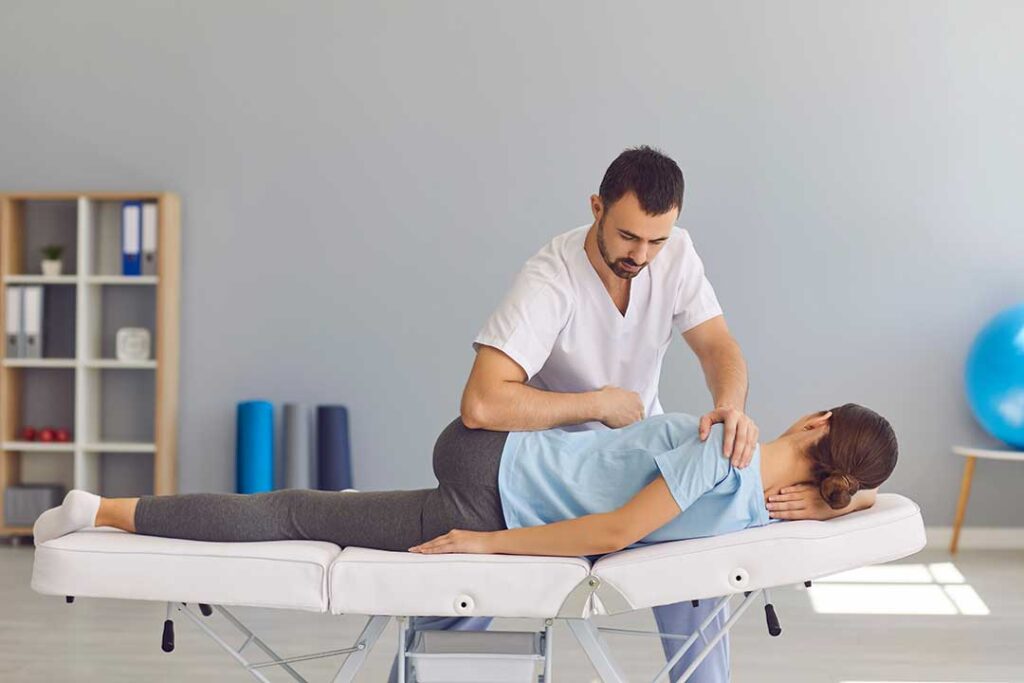
A chiropractic evaluation may examine how the spine and nearby joints move, whether certain muscles are unusually tight, and how posture changes during basic movements. Treatment may include manual therapy, joint mobilization, soft-tissue techniques, and exercises intended to improve control between visits.
The goal is not to make the spine unusually flexible. The goal is to help restore comfortable, functional movement that supports the golfer’s existing technique.
Can chiropractic care help with golf-related back pain?
It may help some people manage uncomplicated mechanical low back pain, especially when symptoms are related to joint stiffness, muscle tension, or movement habits. Manual treatment may temporarily reduce discomfort or improve motion, while exercise and activity changes help address the factors that allow symptoms to return.
Golf places repeated rotational demands on the lower back. Problems are more likely when a golfer:
- Returns to the course after a long winter without preparation
- Hits a large number of balls in one session
- Swings aggressively despite limited mobility
- Walks long distances while carrying an uneven or heavy bag
- Continues playing through increasing pain
- Uses a stance or swing pattern that creates excessive spinal stress
In Schenectady, the seasonal transition from reduced winter activity to frequent spring and summer rounds can make gradual conditioning especially useful. A golfer who has spent several months being less active may need time to rebuild strength, balance, and rotational tolerance before playing multiple rounds each week.
What other parts of the body can affect performance?
Golf discomfort does not always begin in the back. The hips, ankles, shoulders, elbows, wrists, and feet all influence how force moves through the swing.
A stiff ankle can affect balance and weight transfer. Limited hip motion may change pelvic rotation. Shoulder restrictions can make it difficult to complete a comfortable backswing. Weakness in the legs or trunk may cause the arms to do too much of the work.
Chiropractic care may address some of these movement restrictions, but a complete approach should also consider strength and coordination. Mobility without control is not enough. A golfer needs to be able to maintain posture, transfer weight, and slow the club safely through the finish.
This is why a useful plan often includes exercises such as:
- Controlled trunk rotation
- Hip mobility drills
- Glute and leg strengthening
- Balance exercises
- Shoulder and upper-back strengthening
- Gentle grip and forearm conditioning
Exercises should match the golfer’s age, current fitness, injury history, and symptoms. A movement that feels appropriate for one player may be unsuitable for someone recovering from surgery, a fracture, nerve symptoms, or a significant joint problem.
Can chiropractic treatment improve swing consistency?
It may improve the physical conditions that support consistency, but it does not replace golf instruction. A golfer may feel more comfortable turning or maintaining posture after treatment, yet still need help with grip, alignment, tempo, or club path.
A practical way to think about this is that chiropractic care may address the body’s movement capacity, while golf instruction addresses the mechanics of the swing. These areas can complement each other.
A player who repeatedly loses balance, rises out of posture, or shortens the backswing because of stiffness may benefit from addressing physical limitations. However, changing swing mechanics without understanding the cause can sometimes create new strain. Improvements should be gradual, and pain should not be treated as a normal requirement for progress.
What should golfers do before a round?
A few minutes of preparation can help the body transition from sitting or driving to walking, bending, and rotating. A warm-up should raise body temperature and rehearse the movements used during play.
Before teeing off, a golfer might:

- Walk briskly for several minutes
- Perform gentle hip, shoulder, and upper-back movements
- Make practice swings that gradually increase in speed
- Start with shorter clubs before using a driver
- Avoid forceful static stretching when the muscles are cold
- Take a brief break if pain begins to change the swing
The first several swings should not be treated as maximum-effort attempts. This is particularly relevant in cooler spring weather, when muscles and joints may feel less prepared. Layers that allow comfortable movement and a gradual warm-up can be helpful during early-season rounds.
When is golf pain a reason to stop playing?
Mild muscle fatigue after an unfamiliar activity is different from sharp, worsening, or radiating pain. A golfer should stop and seek appropriate medical assessment when symptoms include:
- Numbness, tingling, or weakness in an arm or leg
- Pain traveling below the knee or into the hand
- Loss of bladder or bowel control
- Severe pain after a fall or direct impact
- Significant swelling, deformity, or inability to bear weight
- Chest pain, unusual shortness of breath, or faintness
- Pain that continues to worsen despite rest
Persistent symptoms also deserve attention rather than repeated rounds of self-treatment. Chiropractic care may be appropriate for some musculoskeletal conditions, but serious injuries and medical causes of pain require evaluation through the appropriate healthcare setting.
How can golfers use chiropractic care responsibly?
The most useful role for chiropractic care is usually active rather than passive. Manual treatment may help reduce stiffness or discomfort, but long-term improvement depends on what happens between visits.
A responsible plan should include a clear explanation of the suspected movement problem, exercises that can be performed safely, guidance on modifying activity, and a plan for returning to golf. Progress should be measured by practical changes, such as walking comfortably, completing a controlled practice swing, or finishing a round without increasing symptoms.
Golfers should also review equipment fit, walking habits, lifting technique, and training volume. Carrying clubs on one shoulder, lifting a bag with a rounded back, or suddenly adding several rounds per week can undermine progress even when joint mobility improves.
For local residents, the central lesson is straightforward: better golf health comes from preparing the whole body, respecting symptoms, and combining movement care with strength and sound swing mechanics. Chiropractic treatment may be one useful component when stiffness or mechanical discomfort is limiting a golfer’s ability to move comfortably.
